

Remember those endless, glowing nights spent in crowded computer clubs, surrounded by the smell of instant noodles, energy drinks, and the deafening clatter of mechanical keyboards? You probably fell in love with Counter-Strike 1.6 back in the golden era of online gaming, when tactical shooting meant staring into a heavy CRT monitor, tweaking your mouse sensitivity down to the pixel, and shouting “fire in the hole!” across a smoky room. First released way back in 2000 as a humble modification for Half-Life, this legendary title completely revolutionized the FPS genre, defined modern esports, and shaped the gaming lives of millions across the globe. Decades later, its fast-paced, high-skill gameplay remains deeply rooted in gaming culture.
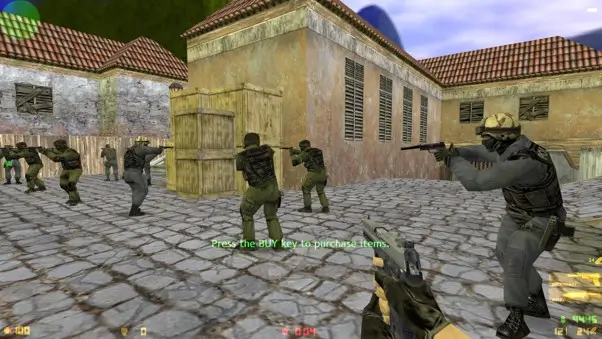
Given how powerful modern smartphones have become – capable of running sprawling open-world titles and high-framerate Battle Royales – an obvious question naturally pops into your mind. Wouldn’t it be absolutely epic if you could just pull out your smartphone right now while waiting for the bus, tap a quick icon, and immediately drop into a fast-paced round of de_dust2 or cs_mansion? You would think that bringing such a iconic classic to mobile screens would be a guaranteed blockbuster hit. Yet, as you search through official app stores, you are left empty-handed. Let us dive deep into the technical, legal, and economic reasons why your phone is still missing an official release.
Table of Contents
Stop, doesn’t CS 1.6 already exist on Android?
If you spend enough time searching online forums or watching dubious mobile gaming videos, you have likely come across sketchy third-party download links claiming to offer a fully working mobile APK. You might be asking yourself if the game is already out there hiding in the wild. But let us be completely real and honest for a second. There is absolutely no official, polished, or Valve-sanctioned mobile version of this classic game on any mobile platform.
What actually exists are experimental fan-made engine wrappers, most notably modified ports of the Xash3D engine. While these projects are technically impressive achievements by dedicated coders who managed to parse original game data on Android architecture, they are far from a plug-and-play commercial product. Setting them up requires downloading separate engine applications, manually copying original game files from a PC directory to your phone’s internal storage, and tweaking complex config files. Even if you manage to launch the app, the reality hits fast – the controls feel wildly chaotic on a glass touchscreen, crosshair precision is nonexistent, and the smooth charm of classic movement quickly vanishes into clunky mechanics.
Why Valve is not rushing to release CS 1.6 Mobile
You are probably wondering why the developers behind your all-time favorite shooter are sleeping on what looks like a massive goldmine of nostalgic players. The truth is simple and pragmatic – Valve has completely moved on. As a corporate entity, Valve prioritizes massive live-service titles like CS2, Dota 2, and expanding their Steam ecosystem alongside hardware like the Steam Deck. They left the ancient C++ code of classic GoldSrc engine titles behind in the mid-2000s, treating them as legacy software rather than active development projects.
Porting a two-decade-old engine to modern mobile operating systems requires massive engineering effort, refactoring legacy code, and establishing ongoing server maintenance – resources Valve would much rather dedicate to their modern competitive ecosystems. Interestingly enough, passionate desktop players still adore the original experience on PC. Desktop fans have even built custom clients, such as Counter-Strike 1.6 NextClient for PC, which introduces modernized features like fast security updates, client-side optimizations, and improved server browser functionality. Yet, while the desktop version continues to receive love from dedicated independent developers, mobile platforms receive zero official attention from Valve.
Are there any fan-made CS 1.6 ports for Android?
As mentioned earlier, the open-source community tried to tackle this massive task on their own several years ago. Modders took the engine source code and laboriously built touch interfaces, virtual joysticks, and custom graphics renderers to get original maps loading on mobile devices. However, catching a nostalgic vibe through these fan ports turns into major frustration very quickly once you attempt to play a real match.
The biggest hurdle for fan-made projects is netcode and server compatibility. Modern online servers for classic shooters utilize custom plugins, specialized anti-cheat systems, and updated master servers to prevent malicious exploits. Connecting to real, populated multiplayer servers using an unofficial Android wrapper is practically impossible. You are almost always met with protocol mismatch errors, missing client resources, or instant kicks from server anti-cheat scripts. You end up spending hours fighting unstable menus, broken audio channels, and crashing application screens instead of actually enjoying a smooth round with your friends.
The hardest part is not launching the game, but making it playable
It is easy to assume that running old software on modern hardware is easy, but porting a hardcore competitive PC shooter to mobile is not just a matter of converting file formats. Even if a group of extremely talented independent developers wanted to build a proper, bug-free Android version for the community, the technical and ergonomic hurdles are overwhelming.
First, consider the control scheme. The original shooter relies on precise mouse movements for recoil control, pixel-perfect crosshair placement, rapid weapon switching, and complex movement techniques like bunny-hopping and counter-strafing. Translating those deep physical controls onto a flat 6-inch glass screen filled with cluttery virtual buttons ruins the tight feedback loop that made the original so famous. Second, optimizing network packets across thousands of unpredictable mobile Wi-Fi and cellular connections without a dedicated backend server infrastructure creates unbearable latency and desync. Finally, managing Android device fragmentation – supporting thousands of different processor architectures, screen aspect ratios, and GPU drivers – requires a full-time quality assurance team. It demands commercial studio funding and continuous legal approval, something a small group of modders simply cannot maintain long-term.
Wrapping up the mobile dream
When you break down all the legal boundaries, technical barriers, and control design nightmares, it becomes clear why a true mobile port remains a distant memory. Since getting a legitimate, high-quality mobile version running on your handheld device remains an impossible dream, you have only one real option left to satisfy that nostalgic itch. Dust off your desktop computer, open up your browser, look for a reliable source, and perform a proper cs 1.6 download right onto your PC. Fire up those legendary maps, feel that addictively crisp recoil control once again, pick up your favorite rifle, and reconnect with a passionate online community that refuses to let the greatest tactical shooter in history fade away.